

Too Much Chlorine in Hot Tub Water: Is It Dangerous?
The kids are already in their swimsuits, and the test strip came out darker than any color on the chart. Now you’re standing there with the cover half off, wondering whether you’ve made the water unsafe. Most owners hit this moment, usually right after a shock and never wonder if there’s too much chlorine in hot tub water.
The short answer: free chlorine above 5 ppm is too much for a hot tub, and at the levels a spa reaches, it irritates rather than poisons. Most high readings drift back into the recommended range within a day or two once you stop dosing and open the cover. Here’s what to do right now.
Key Takeaways:
- Free chlorine of 3 to 5 ppm is the safe range; above 5 ppm is too high.
- High chlorine at spa levels causes irritation and a strong chemical smell, not poisoning.
- Most high chlorine levels fall on their own within a day or two.
- Fumes build up fastest indoors with poor ventilation.
- A sharp chlorine smell often points to used-up sanitizer, not too much.
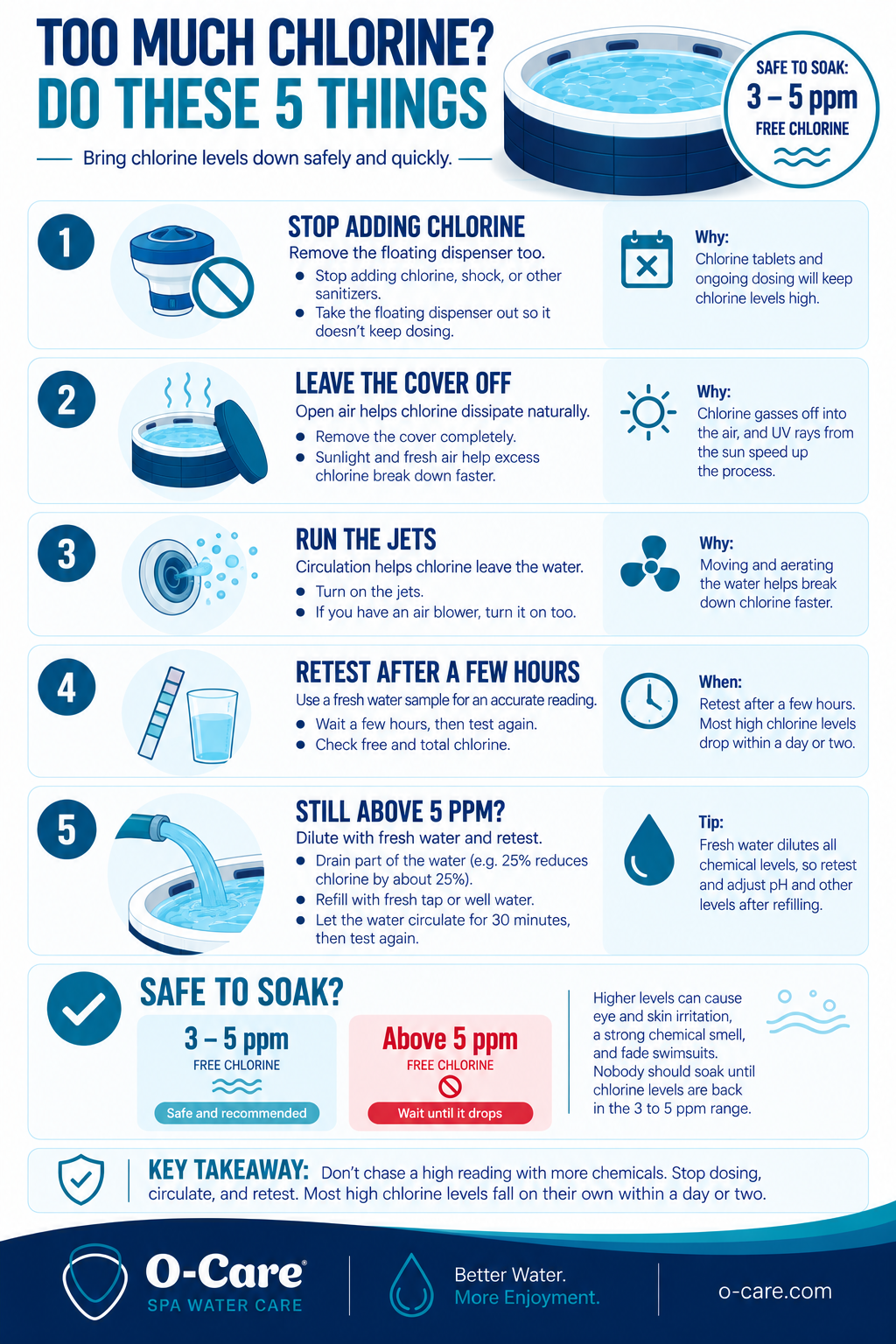
What Should You Do Right Now When Chlorine Is Too High in a Hot Tub?
Stop dosing and let the water do the work. Chlorine dissipates naturally once the water is open to the air, and running the jets speeds up the process. Most hot tub owners only need these five steps, and nobody should soak until chlorine levels are back at 5 ppm.
- Stop adding chlorine and lift out the floating dispenser, because its chlorine tablets keep dosing while you wait.
- Leave the spa uncovered: chlorine dissipates naturally, and UV rays in sunlight speed that up.
- Turn the jets and air controls on so the hot tub water gasses off.
- Retest after a few hours with a fresh water sample for an accurate reading.
- Dilute with fresh water if it’s still high.
How Much Chlorine Is Too Much in Spa Water?
Free chlorine in a hot tub should sit between 3 and 5 ppm, and anything above 5 ppm is too high. That target is higher than a pool needs, because warm water breeds bacteria faster. Our guide to how much chlorine to add covers dosing.
According to the CDC, hot tubs need at least 3 ppm of free chlorine, against 1 ppm for pools. Researchers testing a laboratory hot tub model found untreated spa water quickly filled with bacteria and other contaminants.
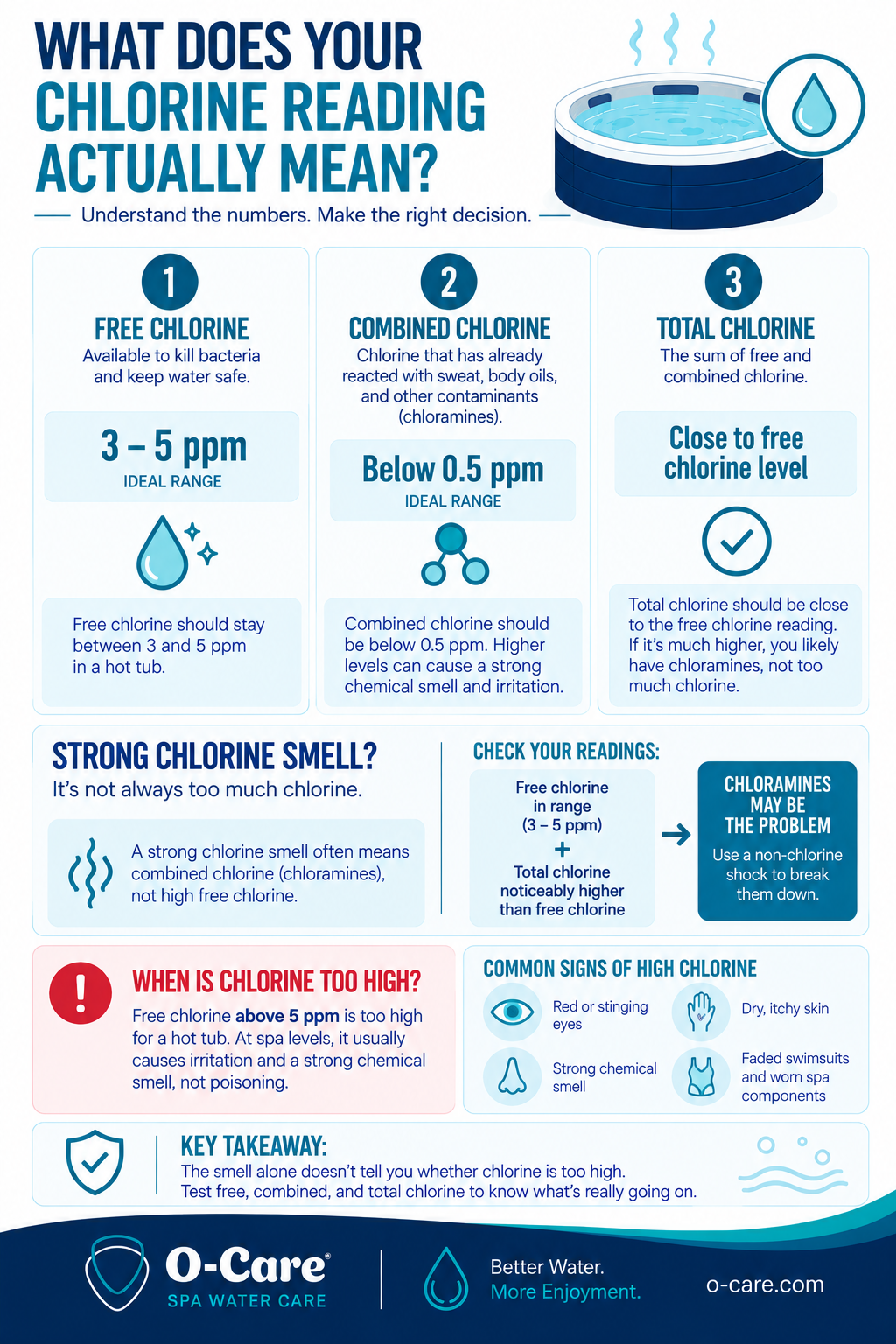
Test strips report three readings:
| Which reading? | What does it measure? | What should it read? |
| Free chlorine | Chlorine still free to kill bacteria and contaminants | 3 to 5 ppm |
| Combined chlorine | Chlorine used up by sweat and organic matter (chloramines) | Below 0.5 ppm |
| Total chlorine | Free plus combined chlorine | Close to the free reading |
Why Does the Same Chlorine Reading Sting More Some Days?
pH decides how harsh the same chlorine concentration feels. Low pH makes water sting eyes and skin; high pH weakens chlorine and tempts owners to add more. Low alkalinity lets pH swing. Keep pH in the 7.2 to 7.8 range and alkalinity at 80 to 120 ppm, and fix pH first: balanced water keeps that concentration comfortable.
Is High Chlorine in a Hot Tub Dangerous?
High chlorine in a hot tub is uncomfortable rather than dangerous for most people. At hot tub levels it causes mild irritation, not poisoning. The real risk is long exposure, or breathing fumes into your lungs in a room with poor ventilation. If symptoms persist, seek medical attention.
According to an EPA-accepted spa shock label, shock treatment adds about 10 ppm, and nobody should get back in until chlorine levels drop below 5 ppm.
Eye Irritation, Itchy Skin, a Strong Chemical Smell: Is It the Chlorine?
Eye irritation usually comes first: redness and stinging during or after a soak. Dry skin and itchy patches follow, especially on sensitive skin. A chlorine smell that clings to your hair and swimsuit completes the picture, and each soak in that water adds to the exposure.
If you can smell chlorine near your hot tub, test free and total chlorine. A big gap means chloramines, not too much chlorine, and more chlorine makes the smell worse.
Cloudy water isn’t a sign of high chlorine. It points to cloudy water causes such as high pH. Calcium hardness levels have the same effect.
Faded Swimsuits, Worn Spa Components: What Else Does High Chlorine Damage?
Over chlorination wears on more than skin. Swimsuits fade within a season, the underside of hot tub covers breaks down, and corrosion eats at heaters, jet fittings, and pump equipment. Months of over chlorination dull acrylic surfaces and crack pillows, and all that corrosion turns a chemistry problem into a repair bill.
Why Does Hot Tub Water End Up With High Chlorine Levels?
Chlorine climbs too high when more goes in than the water uses up: dosing chemicals by habit instead of by test, shocking and dosing on the same day, or a floating dispenser left open too wide. Heat and hot tub covers slow the natural drop, so over chlorination lingers.
The most common trap starts with the smell: it seems to call for a shock, so chlorine levels climb. Usually the smell was chloramines, and too much sanitizer deepens the chemical imbalance.
Heavy use swings it the other way: sweat and lotions burn chlorine off, so the next dose overshoots. Leftover bromine can skew water readings too; see chlorine or bromine levels.
That cycle of dosing, testing, and correcting is where most skin complaints start: every overshoot is a concentration spike you soak in. What changed our routine was cutting the organic load behind it. O-Care’s mineral salts break that buildup down, so owners use up to 78% less chlorine or bromine.
You still need chlorine or bromine. What changes is how much, and how rarely the reading overshoots.
How Do You Reduce Chlorine Levels With Fresh Water or a Neutralizer?
Three options lower chlorine, slowest to fastest:
- Waiting with the cover open costs nothing.
- Diluting with fresh water works in an afternoon.
- A chlorine neutralizer, usually sodium thiosulfate, or hydrogen peroxide works within hours, but both are easy to overdo.
Amounts depend on water volume and chlorine levels, so our guide to lowering chlorine with hydrogen peroxide covers each method.
How Often Should You Test as Part of Hot Tub Maintenance?
Test your spa water chemistry two or three times a week and after every dose, shock treatment, or heavy use. According to the CDC, test strips are less accurate than a DPD kit, so confirm a high reading before you drain or add sanitizer.
For better chemical control, note which chemicals went in and when; most overshoots trace back to a dose nobody wrote down. Maintaining proper water chemistry gets easier once regular testing is a habit.
Conclusion
Too much chlorine feels alarming in the moment: the smell, the stinging eyes, a strip darker than the chart. It’s rarely more than that. Take the cover off, run the jets, keep people out, and give the water a day. It sorts itself out far more often than it needs rescuing.
The bigger shift is noticing why it happened. High readings come from chasing demand, dosing more after busy days and overshooting when the tub goes quiet. Steady water needs fewer chemicals and less correcting. If you’d rather stop swinging between too little and too much, see how a gentler routine works.
FAQs
Is High Chlorine in a Hot Tub Dangerous?
Rarely. Children, people with asthma, and anyone with sensitive skin react first when exposed, so keep them out until chlorine levels are back at 5 ppm. Spilling or mixing concentrated chemicals is the dangerous part, not the soak.
What Are the Side Effects and Symptoms of Too Much Chlorine?
Red eyes, dry or itchy skin, and chlorine-scented hair are the usual ones. Indoors, fumes can irritate your lungs and cause respiratory symptoms. They fade after a rinse.
What Happens If You Go in a Hot Tub With Too Much Chlorine?
A short soak above 5 ppm usually means red eyes, itchy skin, and chlorine-scented hair. Longer exposure worsens the irritation, and indoor fumes reach your lungs.
How Long Does It Take for High Levels of Chlorine to Drop in a Hot Tub?
Most high chlorine levels fall within a day or two with the cover off and jets running. Sunlight speeds the process; a covered hot tub at 104°F (40°C) holds chlorine longer. Retest every few hours and dilute to lower chlorine if it stays high.
Are Chlorine Fumes From a Hot Tub Harmful?
Inhaling them indoors can be. According to the CDC, chloramines turn into gas above the water and, with poor airflow, are irritating to the eyes, nose, and lungs, causing coughing and wheezing. People with asthma feel it first, so open a door, run a fan, and keep exposure short.
What Are the Symptoms of Chlorine Poisoning From a Hot Tub?
True chlorine poisoning comes from concentrated gas reaching the lungs or from swallowing pool chemicals, not from soaking. Hot tub water causes eye irritation, redness, coughing, and occasionally nausea; that sickness usually eases within hours in fresh air. If symptoms persist, get medical attention or call poison control.
How Do You Get the Chlorine Smell Out of a Hot Tub Without Adding Chlorine?
A strong smell usually means chloramines, not excess chlorine. If total tops free chlorine by more than 0.5 ppm, a non-chlorine shock treatment breaks the chloramines down without raising chlorine levels further. Leave the cover off so the gas escapes.
Is It Safe to Be in a Hot Tub With High Chlorine?
Wait until chlorine levels are back in range at 5 ppm or below. A brief soak at elevated levels rarely harms healthy adults, but the red eyes and itching afterward aren’t worth it.


